AI SEO that actually ships: a simple, scalable workflow using LLM + Surfer


The fastest path to durable SEO wins in 2025 is pairing generative workflows (for speed) with on‑page optimization (for precision). Use LLM to generate strategy, briefs, and drafts, then use Surfer to align every page with entities, structure, and internal links that AI search and Google reward. This combined approach lets a lean team execute an agency‑grade program end to end.
What changed in SEO 2025
AI search and zero‑click experiences are reshaping discovery, so content must be optimized for both Google and AI chats; topical coverage and entities now matter more than exact match density.
Data shows AI can lift rankings and efficiency, but traffic is concentrating where freshness, entity coverage, and source credibility are strongest; staying visible requires systematic briefs and refresh cycles.
Your 6‑step AI SEO workflow
Use this loop weekly; it goes from roadmap to measurement and back.
Strategy roadmap (6 months)
Generate a sequenced plan covering themes, target outcomes, and success metrics using a prompt set that outputs: objectives, ICPs, topical clusters, cadence, and KPIs. Each prompt builds on the previous to keep strategy and production linked.
Keyword research and prioritization
Turn business goals into prioritized keyword sets with intent, difficulty, and topic relationships; structure outputs to feed briefs and internal links in later steps.
Topic ideation and clustering
Convert keywords into article ideas grouped as clusters and subtopics so each page reinforces the others; this sets you up for stronger entity and internal link graphs.
SEO content brief and outline
Auto‑create outlines that specify H1–H3s, entities to cover, FAQs, internal link targets, word count, and media; treat this as the “contract” between strategy and writing.
Drafting with AI, then humanizing
Generate the first draft from the brief, then refine tone, examples, and claims; compare against current top results and your brand’s previous content before optimization.
Performance monitoring and refresh
Track rankings, content score, internal link coverage, and AI/zero‑click exposure; schedule refresh alerts to maintain topical depth and recency where it matters most.
Where Surfer fits (and why)
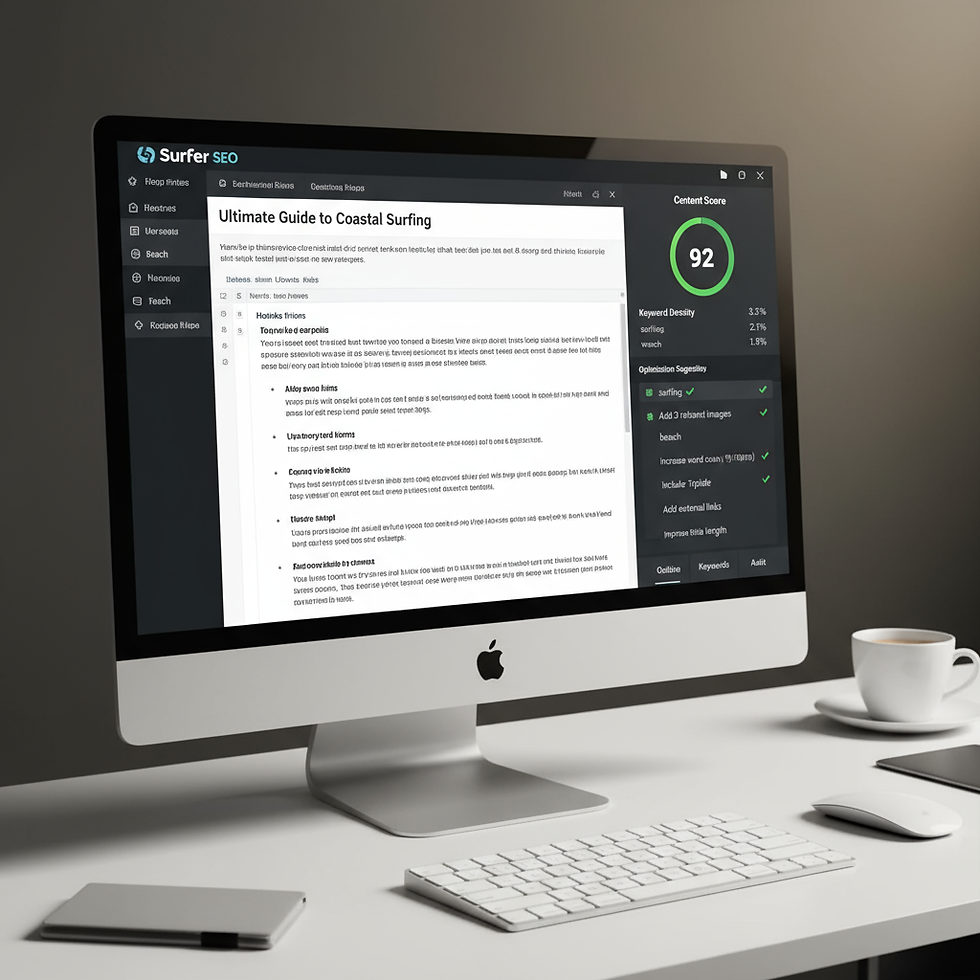
Surfer operationalizes the parts of on‑page SEO that move rankings by aligning copy to entities, gaps, and internal link structure—now across both Google and AI chats. Key capabilities:
Content Editor with entity and topical coverage guidance, structure and word‑count targets, and real‑time content scoring tied to ranking correlation.
Auto Internal Links that scans your site and inserts relevant links so Google and AI assistants see coherent topic maps.
Auto‑Optimize and Content Score to close gaps quickly and keep pages in the “green” performance zone.
AI Detector and Humanizer to manage compliance and tone when using AI drafts at scale.
Practical takeaway: topical coverage and entity depth beat exact‑match density; Surfer’s score correlates with higher rankings, making it a reliable “north star” during editing.
A proven division of labor
Strategy and prompts: use the “Your AI SEO Consultant” prompt set to produce the roadmap, prioritized keywords, briefs, and monitoring scaffolding. It’s designed so each step feeds the next.
Drafting: generate first drafts quickly, but always compare against current ranking pages before editing; keep the brief as the single source of truth.
Optimization: paste the draft into Surfer’s editor, hit entity and coverage targets, align structure, and push the Content Score into the green zone.
Internal links: run Surfer’s Auto Internal Links to tie the page into your clusters; confirm links match intent and spread authority, not just volume.
Step‑by‑step: from keyword to published page
Create the brief (H1–H3, questions, entities, sources, internal links) from the strategy prompts.
Draft with AI; add brand voice, examples, data, and unique POV to differentiate from competitors and AI summaries.
Optimize in Surfer: raise topical coverage and entity alignment; match recommended structure and word count; keep readability high.
Insert internal links with Surfer; verify anchor diversity and topical relevance.
Publish, then set a refresh alert; revisit after new algorithm shifts or when competing pages add coverage you lack.
Guardrails for AI‑search visibility
Favor entity‑rich, question‑answering sections and clear scannable structure—AI results prefer fresher, context‑dense sources.
Front‑load key answers and evidence; include citations, visuals, and structured subheads to increase “answerability” for AI chats.
Maintain freshness cycles for head terms and commercial pages; AI platforms over‑index on recency compared to traditional organic results.
Tooling stack to consider
Briefing and on‑page optimization: Surfer (editor, entities, internal links, auto‑optimize, humanizer).
Prompt system for the SEO workflow: “Your AI SEO Consultant” (roadmap → research → outline → draft → monitor).
Complementary research/editors: Clearscope/NeuronWriter/Frase/MarketMuse for alternate views on entities and coverage when needed.
What “good” looks like in this model
A 6‑month roadmap with clusters and refresh dates produced from a modular prompt set.
Every article enters Surfer’s editor, hits entity/coverage targets, reaches green Content Score, and ships with internal links inserted.
Quarterly refreshes for priority pages, triggered by rank dips, competitor coverage gains, or new AI‑overview patterns.
Quick start checklist (one‑week sprint)
Day 1: Generate roadmap + clusters with the prompt set; select 4 priority topics.
Day 2: Produce four briefs (H1–H3, entities, FAQs, links).
Days 3–4: Draft two articles; edit for voice and evidence.
Day 5: Optimize in Surfer; get each to green Content Score; insert internal links.
Day 6: Publish; log baseline; set refresh alerts.
Day 7: Review AI search surfaces and competitor coverage; adjust next week’s briefs.
If desired, this can operate alongside an agency: let the agency lead keyword selection and initial briefs, then run drafting and Surfer optimization in‑house to scale output without losing quality.
References and resources
Your AI SEO Consultant (6 linked prompts: strategy → monitoring) https://www.appliedaico.com/blog/your-ai-seo-consultant
Surfer SEO (entities, content score, internal links, auto‑optimize, humanizer) https://surferseo.com/
Ranking factors study (content score correlation, topical coverage focus)
AI SEO trends (traffic shifts, adoption, and ROI markers)
LLM for SEO playbooks (workflows and pitfalls)


Comments